Artificial Intelligence
Artificial Intelligence in Business: Practical Uses, Limits and Risks
A plain-English overview of what AI can do for businesses today, where it is used across industries, its limits and risks, and how to choose a sensible first project.

In shortArtificial intelligence is software that learns patterns from data in order to predict, classify, generate or decide. It works best on specific, repeated tasks with clear success criteria and enough good data, and worst when a problem is vague, rare or depends on context the data does not capture.
AI already sits behind many everyday digital services: the recommendations on a streaming platform, the fraud check on a card payment, the route suggested by a delivery app and the assistant that drafts an email. For business leaders, the useful question is not whether AI is transforming the world, but where it can solve a concrete problem in their own organization, and what it takes to do that responsibly.
What "AI" actually covers
"AI" is an umbrella term for several different technologies. Knowing which one a problem needs makes it much easier to scope.
| Type | What it does | Business example |
|---|---|---|
| Machine learning | Learns from historical data to predict or classify | Forecasting demand, scoring leads, flagging unusual transactions |
| Computer vision | Interprets images and video | Inspecting products, reading documents, counting stock |
| Natural language processing | Extracts meaning from text and speech | Routing support tickets, summarizing contracts |
| Generative AI | Produces new text, images or code from a prompt | Drafting replies, searching internal knowledge |
| AI agents | Plan and carry out multi-step tasks using software tools | Handling routine requests end to end, with human approval where needed |

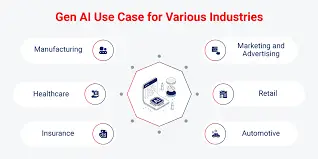
Where businesses use AI today
Customer service
Assistants answer common questions, look up orders and hand complex cases to staff. Their value depends on connecting to real systems and keeping answers accurate. Our guide to the cost of building an AI agent for customer support explains what drives the budget.
Operations and manufacturing
Predictive maintenance models look for early signs of equipment failure, and vision systems check quality on production lines. See computer vision business applications for worked examples.
Finance
Models flag suspicious transactions, extract data from invoices and support cash-flow forecasting. Decisions that affect customers directly, such as credit, need clear explanations and human oversight.
Sales and marketing
Recommendation engines personalize offers, and scoring models help teams prioritize leads. Generative tools speed up first drafts, but anything published still needs review by someone who knows the subject.
Healthcare and life sciences
AI assists with analyzing medical images and research data. In clinical settings it supports specialists rather than replacing them, and tools need formal validation and, where applicable, regulatory approval.
Why data matters more than the algorithm
Most AI projects succeed or fail on their data. A model can only learn what its examples show, so gaps and errors in the data become gaps and errors in the results. Before starting, check:
- Is the data available, and are you allowed to use it for this purpose?
- Does it represent the real situations the system will face, including unusual cases?
- Is it accurate and consistently labeled?
- Who will maintain it once the system is live?
Biased or incomplete data produces biased or unreliable output, which is why reviewing data is a core part of an AI project rather than a preliminary step.
Risks and responsibilities
- Accuracy. Predictive models make errors, and generative models can produce confident but false answers. Design for human review wherever mistakes are costly.
- Bias and fairness. Models trained on historical decisions can repeat past unfairness, for example in hiring or lending. Test outcomes across different groups.
- Privacy and security. AI often needs personal or confidential data. Collect only what is needed, control access and check how third-party AI services store what you send them.
- Transparency and regulation. People affected by automated decisions may need an explanation, and some laws require one. The EU AI Act, for example, sets obligations according to the risk level of a system.
- Changing conditions. Performance can drift as customers, products or processes change, so results need monitoring after launch.
How to choose a first AI project
- Start with a problem, not a technology: a task that is slow, repetitive or error-prone today.
- Make sure success can be measured, for example time saved, error rate or response time.
- Confirm that you have, or can collect, the data the task needs.
- Keep a person in the loop at first, especially where errors affect customers.
- Run a small pilot, measure it honestly, and then decide whether to scale, change or stop.
Where AI is heading
Several developments are already practical rather than speculative: models running on devices and edge hardware for faster, more private processing; assistants connected to company systems through agents; and closer regulation of high-risk uses. The common thread is that value comes from careful integration with real processes, not from the model alone.
Frequently asked questions
Do we need a lot of data to use AI?
Not always. Generative AI and pre-trained models can work with relatively little of your own data, for example when searching internal documents. Custom prediction models usually need more historical examples.
Should we build a custom model or use an existing AI service?
Use an existing service when it solves the problem well enough, because it is faster and cheaper to start. Build a custom model when your data, workflow or accuracy requirements are specific to your business.
Will AI replace our staff?
In most businesses AI changes tasks rather than removing whole roles. It takes on repetitive work so that people can focus on judgment, relationships and exceptions. Planning for training and new responsibilities is part of a good rollout.
Talk to our AI team
VisionColab builds machine learning and generative AI solutions, AI agents and computer vision systems. If you have a use case in mind, get in touch and we can help you judge whether it is a good fit.
Written by the VisionColab team
VisionColab designs and builds AI, web, mobile and cloud software for businesses. Our guides explain the decisions, costs and trade-offs involved in planning a software project.