AI agents
Cost of Building an AI Agent for Customer Support
What actually drives the cost: scope, integrations, knowledge preparation, safety work and running costs.
VisionColab is a software development company working with startups and growing businesses. We plan the product with you, build it, put it into production and keep improving it after launch.
What we do
Most projects start with a process that has outgrown spreadsheets, a product that needs its first version, or a system that needs AI.
We work through the requirements with you, design the architecture, build the application and the integrations it depends on, then deploy it on infrastructure your own team can maintain.
Most projects combine two or three of these. Each card links to a page with more detail on scope and how we work.
Forecasting, classification, risk scoring and recommendation models trained on your historical data, delivered through an API or inside the app your team already uses.
Worth considering when people spend hours reviewing records that follow patterns a model can learn.
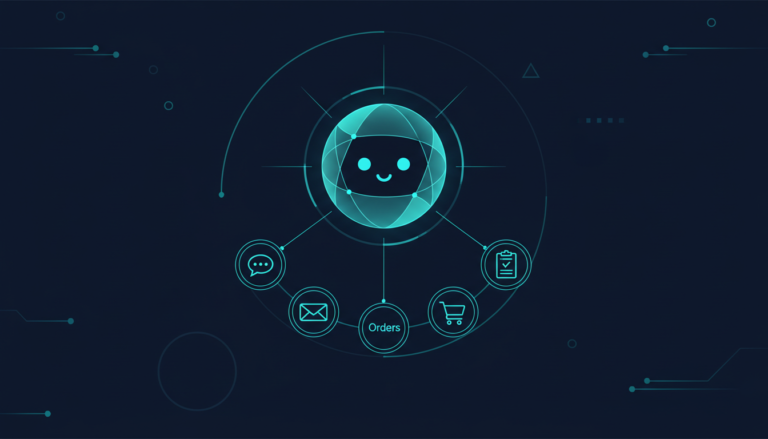
Learn about AI development servicesAssistants that answer from your own documents, and agents that read emails or tickets and prepare updates in your CRM or ERP. Each agent has a fixed list of actions it may take, and a person approves anything sensitive.
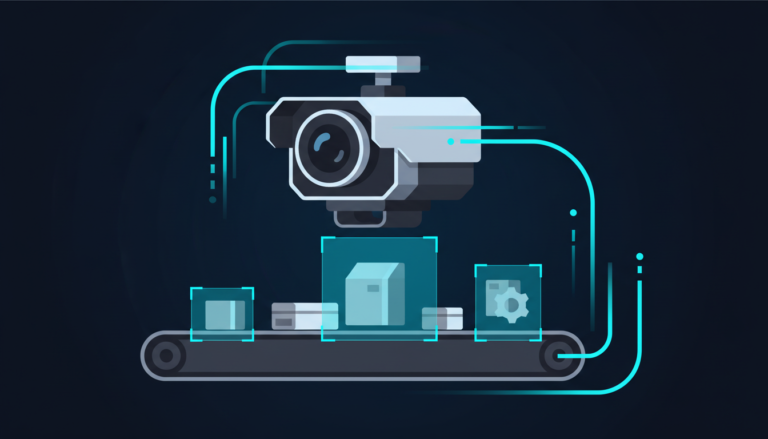
Learn about AI agents servicesObject detection, OCR and video analysis for quality inspection, document capture and site monitoring.
We look at the cameras, lighting and data collection as well as the model, because that is usually where vision projects succeed or fail.
Learn about computer vision servicesCustomer portals, internal tools, dashboards and ordering or booking systems, including the back end, user roles and integrations behind them.
A common starting point is a workflow that currently runs on spreadsheets, email and copy-paste.
Learn about web development servicesiOS and Android apps, built natively or with Flutter or React Native depending on what the app needs, plus the API they talk to. We also handle App Store and Google Play submission and the updates each new OS version brings.
Learn about mobile apps servicesMulti-tenant SaaS platforms with sign-up, subscriptions, billing and admin tools.
When a project genuinely needs a shared ledger, we also build smart contracts and token-based applications, and we will tell you if a normal database would do the job.
Learn about SaaS development servicesAWS and Azure environments defined as code, CI/CD pipelines, cloud migrations, and the API integrations that connect your CRM, ERP, payment and messaging tools.
Learn about cloud engineering servicesUser research, user flows, clickable prototypes and design systems for web and mobile products.
Most of this work happens before development starts, while changing a screen still costs very little.
Learn about UI/UX design servicesTechnical SEO, content and paid campaigns for B2B and technology companies, including making your pages easy for AI search tools to read and cite.
Learn about digital marketing servicesA useful AI system is connected to your data and your tools, has clear limits on what it is allowed to do, and leaves important decisions to a person. These are the five kinds of AI work clients ask us for most often.
An assistant on your website, app or WhatsApp answers questions using your policies, product information and help articles. When a question is outside what it knows, or a customer asks for a person, it passes the conversation to your team with a summary.
Staff ask a question in plain language and get an answer drawn from manuals, contracts, tickets or the internal wiki, with links to the passages it used. Access rules carry over, so people only see documents they are already allowed to open.
An agent reads incoming emails, forms or tickets, classifies them, pulls out the details and prepares the update in your CRM, ERP or helpdesk. It can only use the actions you allow. Steps such as replying to a customer, issuing a refund or changing an order wait for a person to confirm.
We clean and prepare your data, train models and test them against results you already know, then deliver the predictions in the dashboard, app or API your team works in. You see how accurate the model is before anyone relies on it.
Vision models detect defects, count objects or read text from photos, scans and camera feeds. The results feed your business rules: an alert to a supervisor, a daily report, or a record created in your system.
A production application has four layers, and a weakness in one usually shows up in another. We plan them together and choose tools based on the project, the people who will maintain it and the budget.
See all servicesThe screens people use: web apps in React or Next.js and mobile apps in Flutter or React Native, designed in Figma on a shared component library.
We test on real devices and check accessibility before each release.
Typical tools: React, Next.js, Flutter, React Native, Figma
Business rules, sign-in, roles and permissions, payments and third-party integrations, exposed through REST or GraphQL APIs that the web app, mobile app and partner systems all share.
One set of rules behind every channel means a permission or price changes in one place.
Typical tools: Node.js, Python
PostgreSQL or MongoDB depending on the shape of your data, pipelines for reporting, and for AI features, vector search and OpenAI or open-source models.
We log AI inputs and outputs so answer quality can be measured, not guessed.
Typical tools: PostgreSQL, MongoDB, vector search, OpenAI and open-source models
AWS or Azure environments defined as code, Docker containers, CI/CD pipelines with automated tests, and monitoring, alerts and backups.
Releases become a routine step instead of a weekend event.
Typical tools: AWS, Azure, Docker, CI/CD
What you can expect once a project starts.
We ask about your users, current systems, budget and deadlines before suggesting any technology, and we explain the reasoning behind each recommendation in plain language.
The engineers who build a model also build the application and integrations around it. You deal with one team that is responsible for the whole result.
Sometimes the right answer is a well-designed form and a database rather than an AI model. We will say so, and tell you what each option costs to build and to run.
Tests, architecture notes and deployment scripts live in your repositories and cloud accounts. If you hire your own developers later, they can carry on from where we stopped.
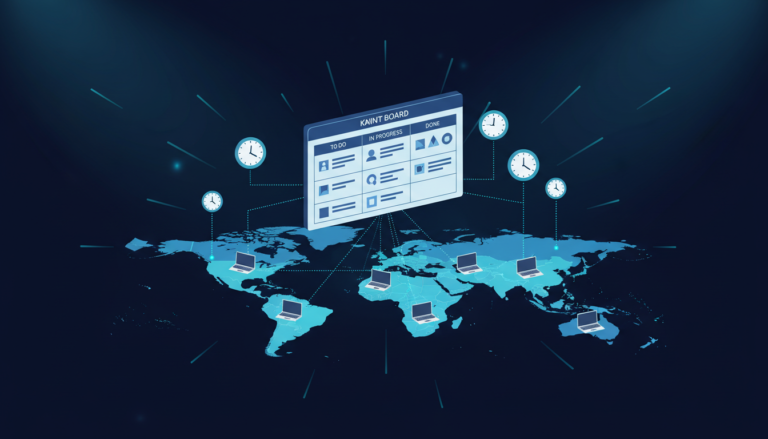
Every sprint ends with a demo of working software. Tasks are tracked in your tools, and we agree fixed overlap hours for calls across time zones.
After release we monitor the system, fix issues, keep dependencies up to date and plan the next round of improvements with you.
From the first call to ongoing support, and what you receive at each stage.
A free call about what you want to build, who will use it and which systems it has to work with. Bring any documents, screenshots or examples you have.
You get: A short written summary of the problem and the open questions
We turn the discussion into scope, a technical approach, a timeline and a cost estimate, then agree priorities with you.
You get: A proposal you can review with your team before committing
You click through prototypes of the main screens and comment on them. Meanwhile we design the data model and architecture.
You get: Approved designs and an architecture plan
Development runs in two-week sprints. At the end of each one you test the new features on a staging site and help decide what comes next.
You get: Working software you can try throughout the project
We deploy to production, watch the first weeks closely and hand over documentation. Support and further improvements continue on a plan agreed with you.
You get: A live product, documentation and a support plan
Our clients are in the United States, Canada, the UK, Europe, the Middle East and Asia. We work remotely and schedule calls around your working day.
You need a first version real users can try, built well enough that it does not have to be thrown away once it works. We help decide what belongs in the MVP and what can wait until you have feedback.
Your team depends on spreadsheets, email threads and tools that do not talk to each other. We build the internal systems, customer portals and automations that remove the copying and double-checking.
You have systems that work but need AI capabilities, a move to the cloud or a modern interface. We can work alongside your own team and change things in stages, without stopping what already runs.
Guides written by our team on questions clients often ask before a project.
AI agents
What actually drives the cost: scope, integrations, knowledge preparation, safety work and running costs.
Computer vision
The main task types, where businesses use them and how to decide whether a vision system fits your process.
Delivery
How we plan, run and review sprints when the team works in another time zone or country.
Not answered here? Ask us directly.
We build AI and Generative AI solutions, custom web applications, iOS and Android apps, SaaS and blockchain platforms, computer vision systems and cloud infrastructure. We also design the user experience and can support launch marketing.
Yes. We start from the workflow you want to improve, then choose the right approach: an assistant connected to your own documents, an automation that acts across your tools, a machine learning model, or image and video analysis. We are clear about what AI can and cannot do reliably for your case.
Yes. We regularly extend existing web and mobile products, connect them to new APIs, add AI features and move them to the cloud. We review the current codebase and infrastructure first so changes do not break what already works.
Both. We help startups decide what goes into a first version and build it, and we help growing businesses and established organizations automate workflows, integrate systems and modernize existing software.
Our team works from Taiwan, Russia and Pakistan with clients in the USA, UK, Europe, the Middle East and Asia. We agree on regular overlap hours for calls and share progress in your preferred tools, so work keeps moving between meetings.
Send us a short description of your goals through the project form or book a free consultation. We review your requirements and come back with a recommended approach, scope and next steps before any commitment.
Yes. Maintenance, monitoring and ongoing improvements can be included in the scope we agree with you, so your product keeps working as your business grows.
Tell us what you want to build, the problem you are trying to solve, or the process you would like to improve. We will review it, ask what we need to know, and suggest a practical next step.
Tell us about your project
Fields marked * are required.